










How to Do a Facial Massage at Home: The 3-Minute IRÄYE Facial Reset
Some days your skin does not feel dry or uncomfortable; your face simply feels tired. Your jaw feels tight, your forehead feels tense, your eyes look puffy and your complexion appears less fresh than usual. This is where knowing how to do a facial massage at home can make a real difference to the way your face feels and looks, and it takes just three minutes.
The 3-Minute Facial Reset follows the IRÄYE Facial Release Method™: targeted pressure, small controlled movements and a gentle, lymphatic-inspired finish in one simple ritual. Unlike a traditional Gua Sha routine, which relies mainly on long gliding strokes, this method works on facial tension first and then moves into lighter, directional massage. The principle is simple: PRESS. MOVE. FLOW. Release first, then support flow.
What You Need

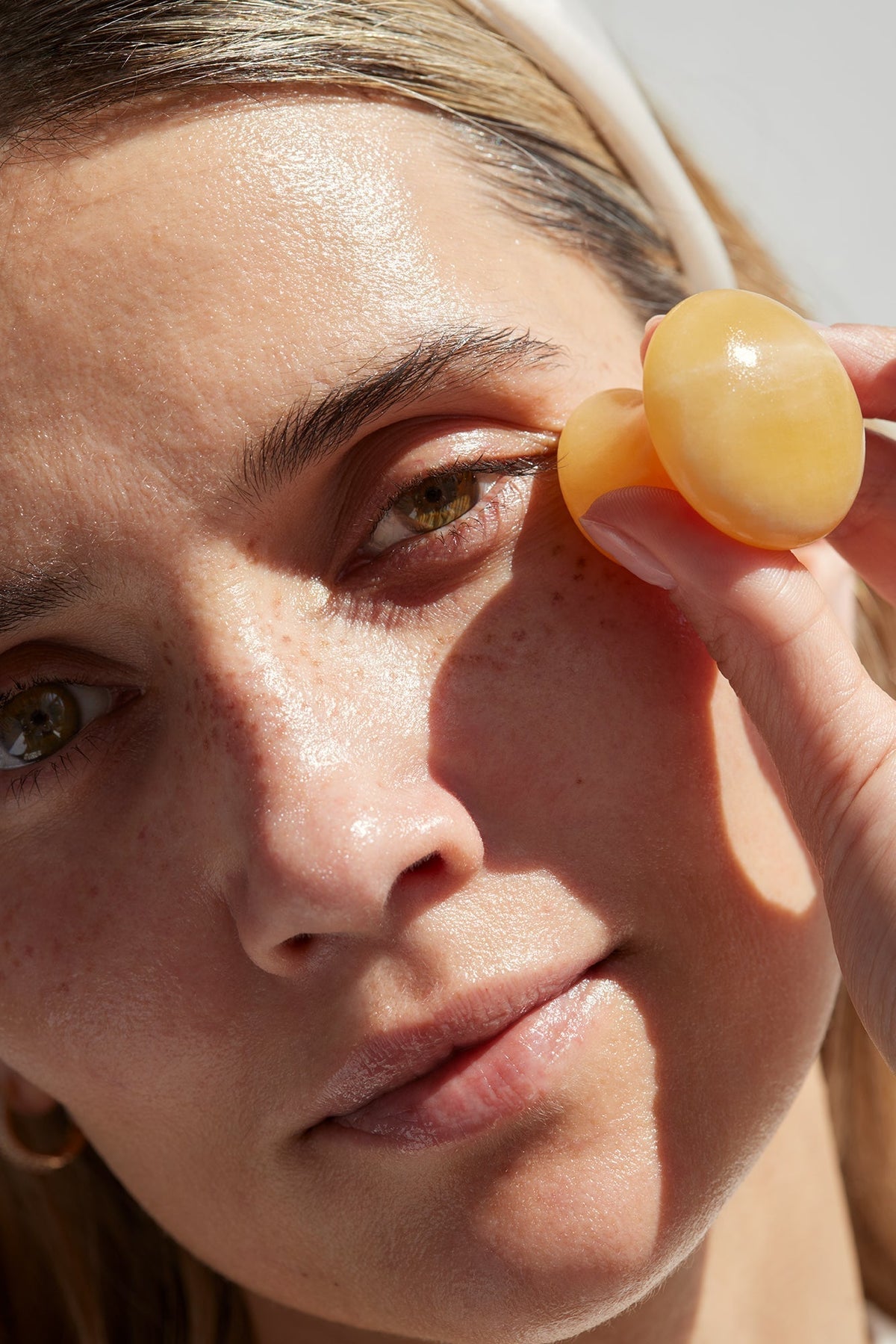
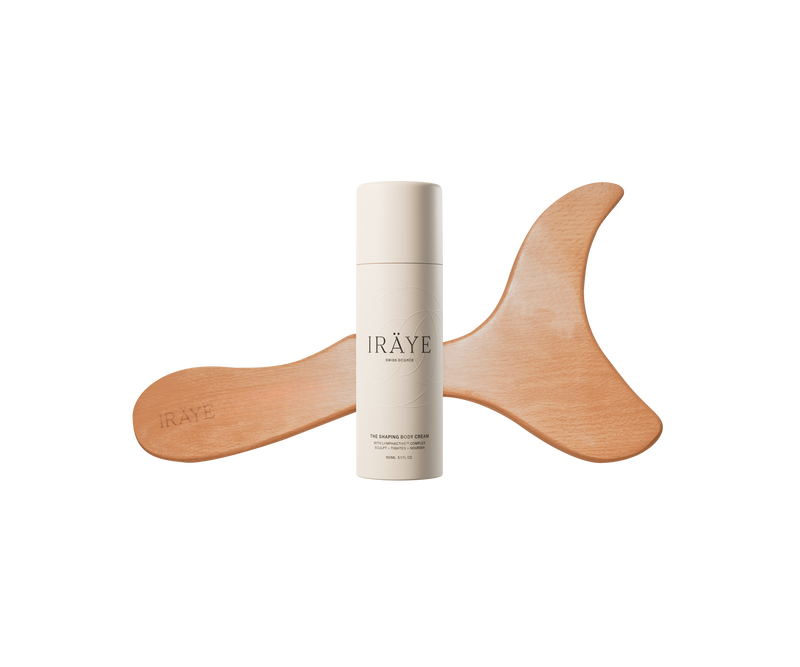
• The IRÄYE Precision Facial Release Tool: a smaller precision end for targeted pressure and a larger rounded end for micro-massage and finishing movements.

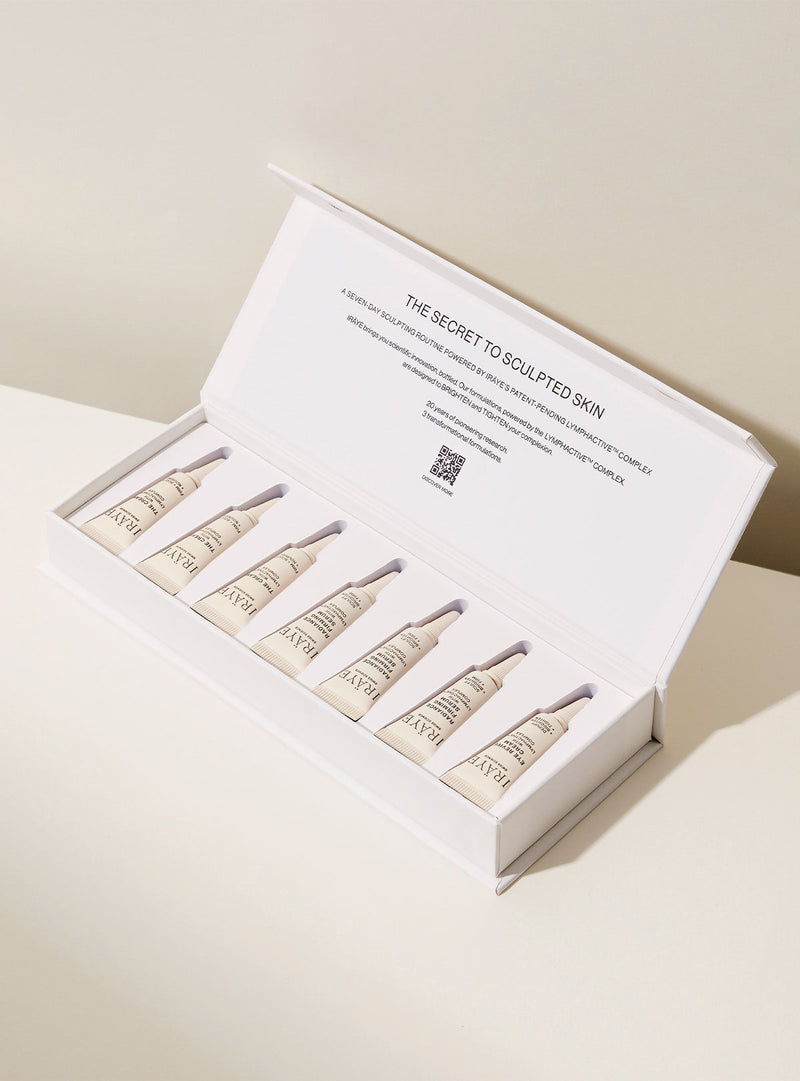
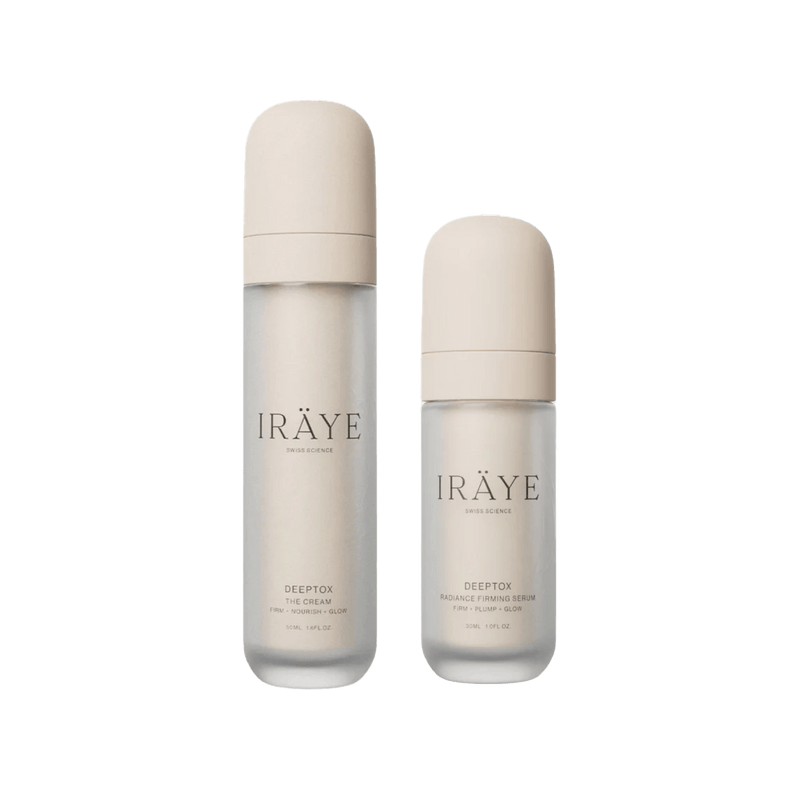
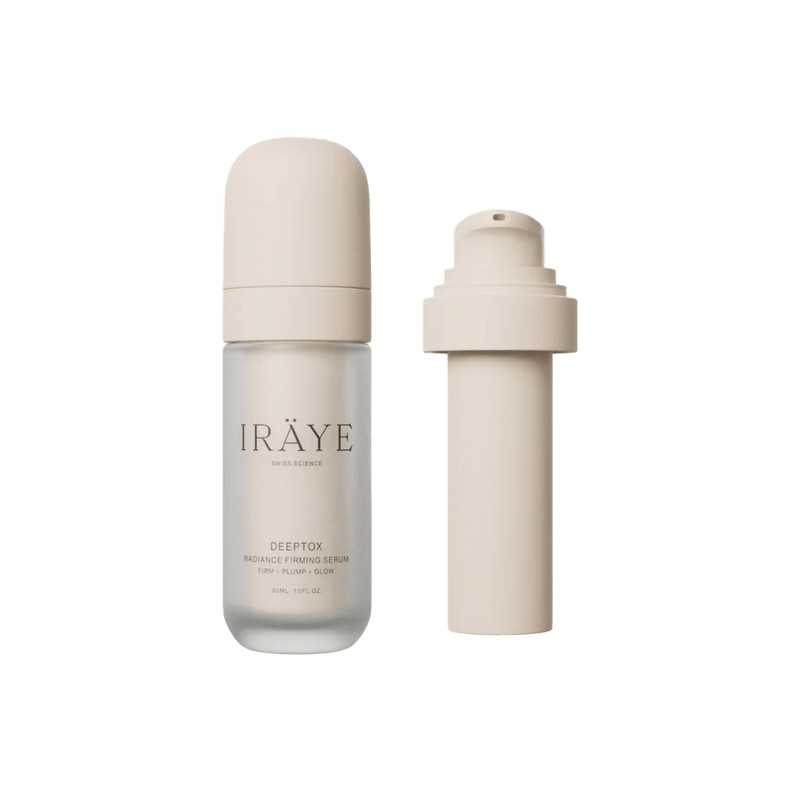
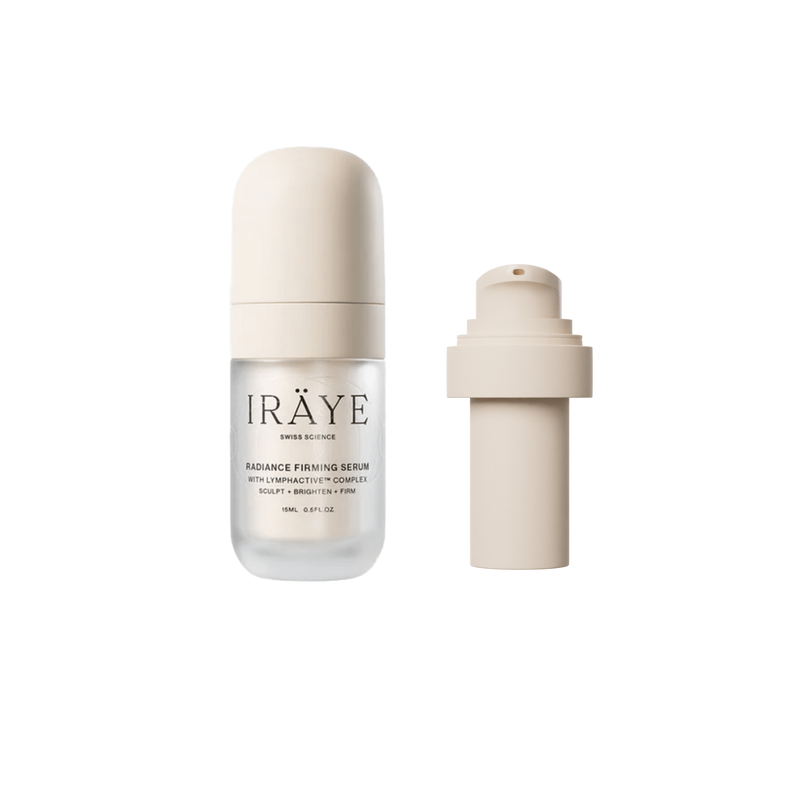
• Radiance Firming Serum with LYMPHACTIVE™: enough slip for comfortable massage while keeping a little grip for precision.

• Three minutes and clean skin.
Why Combine Tension Release and Lymphatic-Inspired Massage?
Facial massage serves different purposes depending on the pressure, movement and area being treated. Targeted pressure suits areas where tension tends to build, such as the jaw, temples and brows. Gentle directional massage, on the other hand, is associated with lymphatic drainage techniques, which use a very light, skin-stretching touch to encourage the movement of fluid in the superficial tissues.
Tension and puffiness are not the same thing, and they do not respond to the same gesture. That is why this routine uses both, in the right order. For the science behind the difference, read What Is Facial Fascia? Muscles, Tension and Why Your Face Is More Than Skin.
Before You Start: Prepare Your Skin
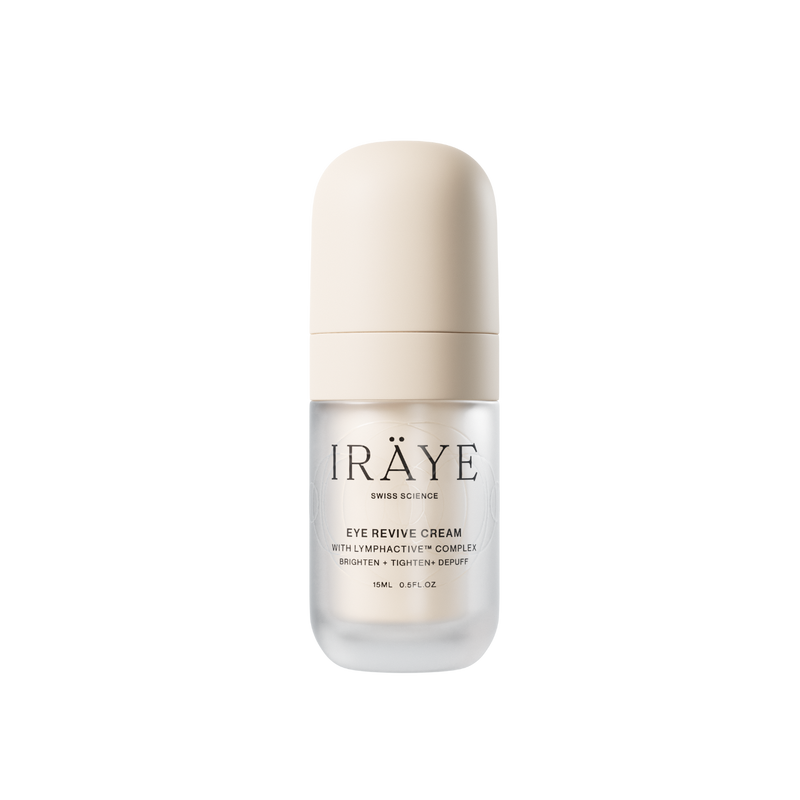
Begin on clean skin and apply the Radiance Firming Serum with LYMPHACTIVE™ across the face and neck. Use enough for comfortable movement while keeping a little grip: during static pressure and micro-movements, control matters more than glide. If you want to focus on the eye area, apply Eye Revive Cream with LYMPHACTIVE™ around the eye contour once you have finished the massage.
Minute 1 — PRESS: Release Jaw, Temple and Brow Tension
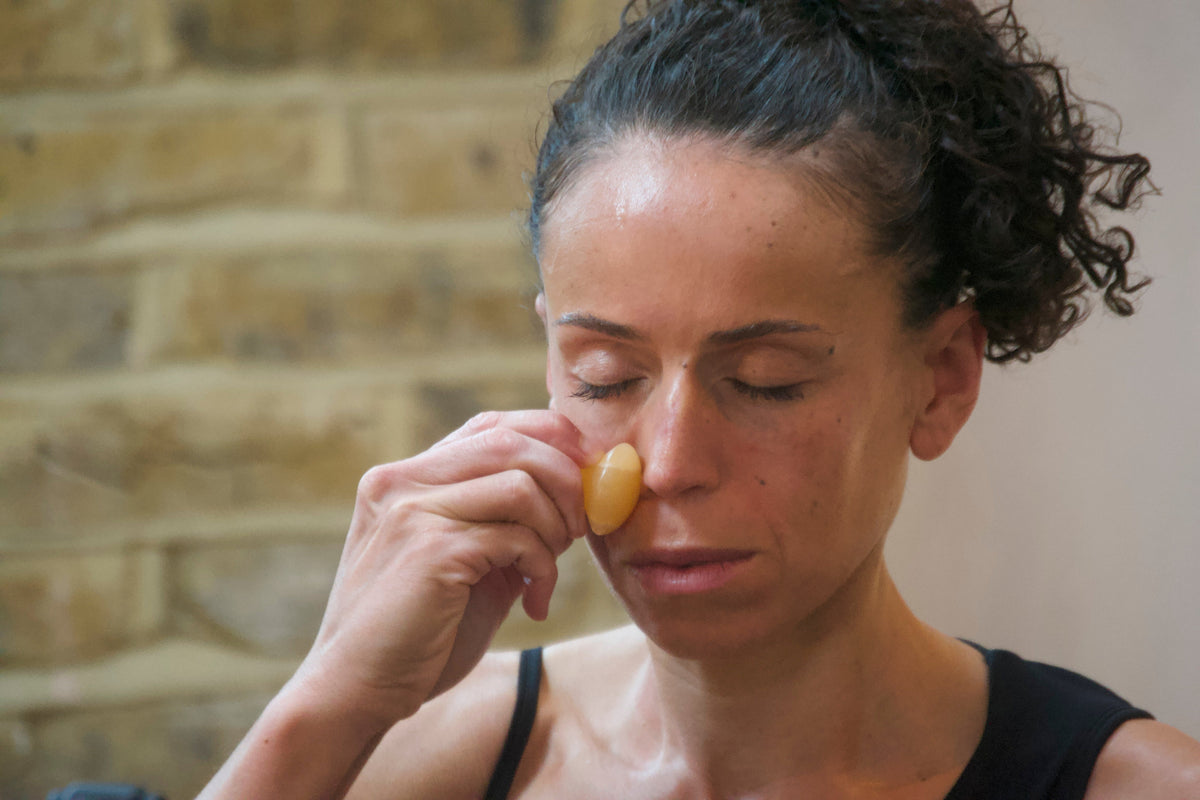
Begin with the smaller precision end of the tool. This first stage focuses on the areas where facial tension is most often felt.
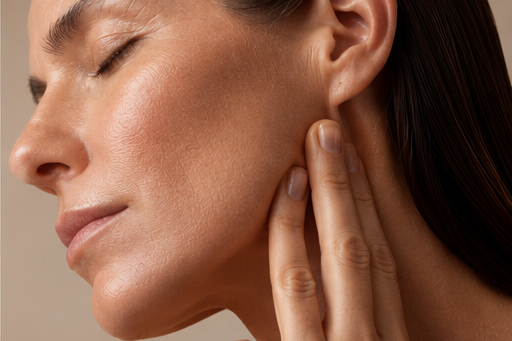
1. Jaw: gently clench your teeth for a moment to locate the masseter muscle, then relax your jaw completely. Apply comfortable pressure to the fleshy part of the muscle for about five seconds, then release fully. Repeat two or three times. If you often clench your jaw, this is usually one of the most satisfying areas to work.
2. Temples: apply gentle static pressure, hold briefly and release slowly.
3. Brows: work along the orbital bone from the inner brow towards the outer brow, never pressing directly on the eye.
4. Brow centre: finish between the eyebrows with one slow, controlled press and release.
The aim is precision, not deep pressure. It should feel controlled and comfortable, never sharp or painful.
Minute 2 — MOVE: Small, Targeted Facial Massage Movements
Switch to the larger rounded end and work with small, local movements.
1. Jaw: make slow circles over the masseter for about ten seconds, rather than sweeping the tool towards the ear.
2. Temples: continue with gentle circles, without dragging the skin.
3. Brow line: use short, controlled movements just above the orbital bone.
4. Forehead: finish with gentle micro-circles over any areas that feel tense.
This is where the method differs from a classic Gua Sha facial massage. Gua Sha uses broad contact and long gliding strokes; precision facial massage works on small areas with micro-circles, gentle rotations and controlled pressure. Think small, slow and precise.
Minute 3 — FLOW: A Light, Lymphatic-Inspired Finish
Keep using the larger end, but reduce the pressure significantly and change the purpose of the movement.
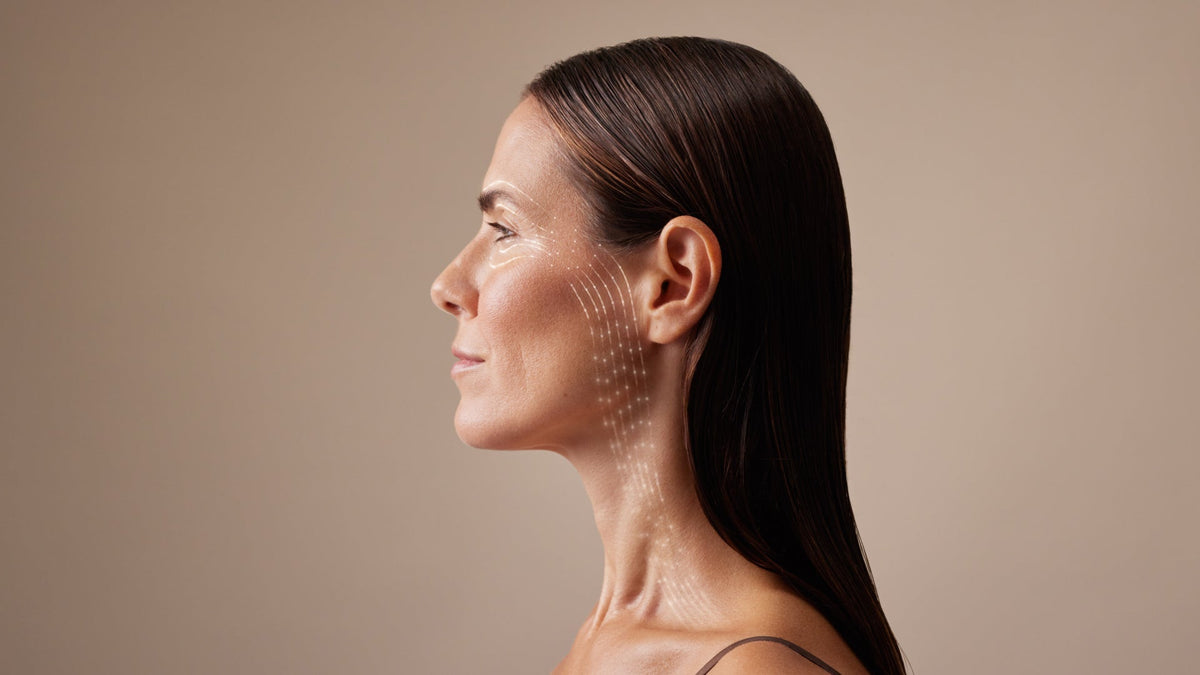
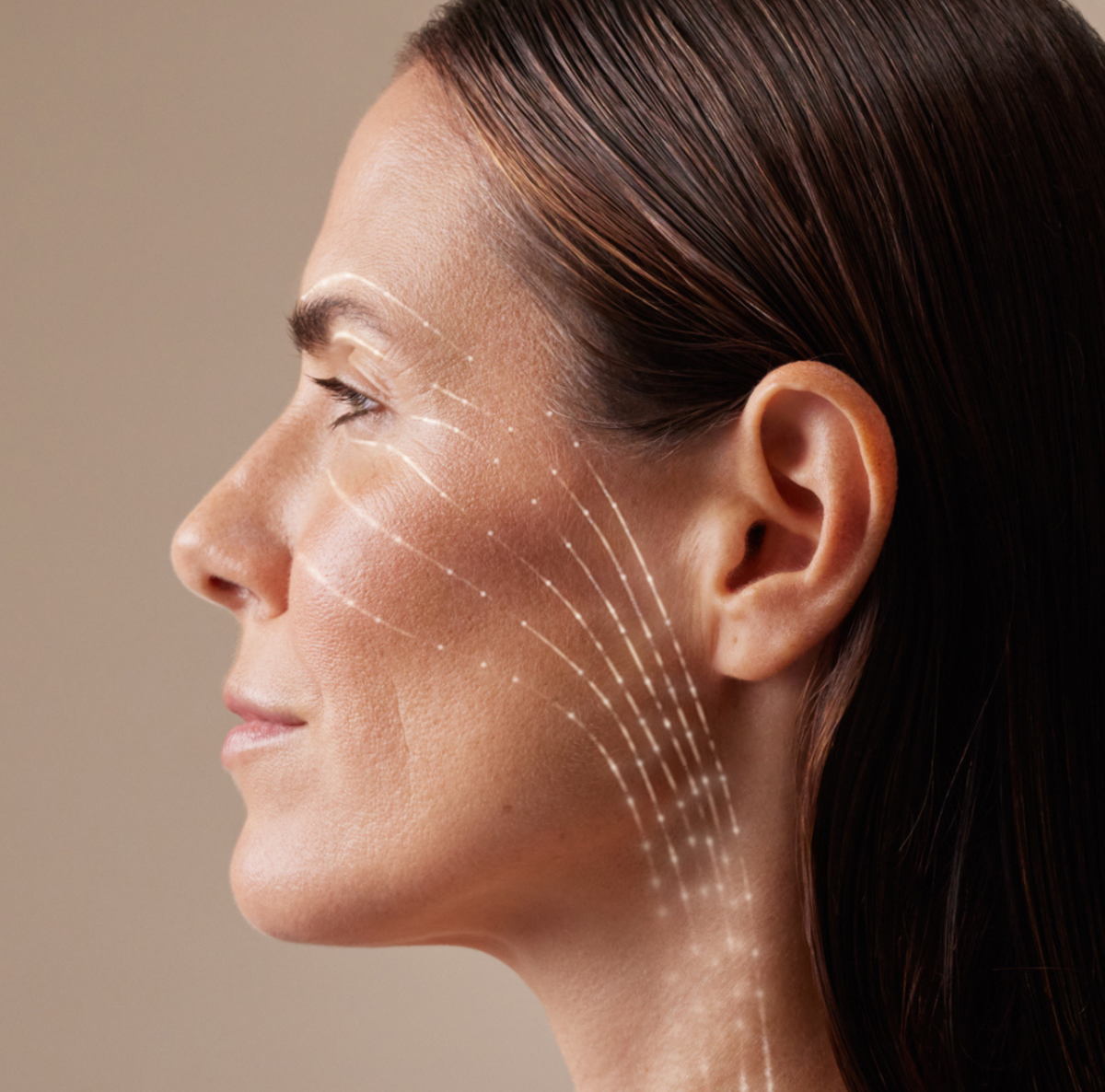
1. Start at the centre of the face and move gently outwards towards the ears.
2. From just in front of the ears, glide down the sides of the neck towards the collarbone.
3. Repeat two or three times. Thirty to 45 seconds is enough.
This is the lymphatic-inspired phase of the ritual, and it should feel noticeably lighter than PRESS and MOVE. The aim is not deep tissue work, but gentle directional massage following the pathways used in facial lymphatic drainage. To understand why lighter pressure matters, read our guide to facial massage techniques: precision pressure, Gua Sha and lymphatic massage.
Finish Your Routine
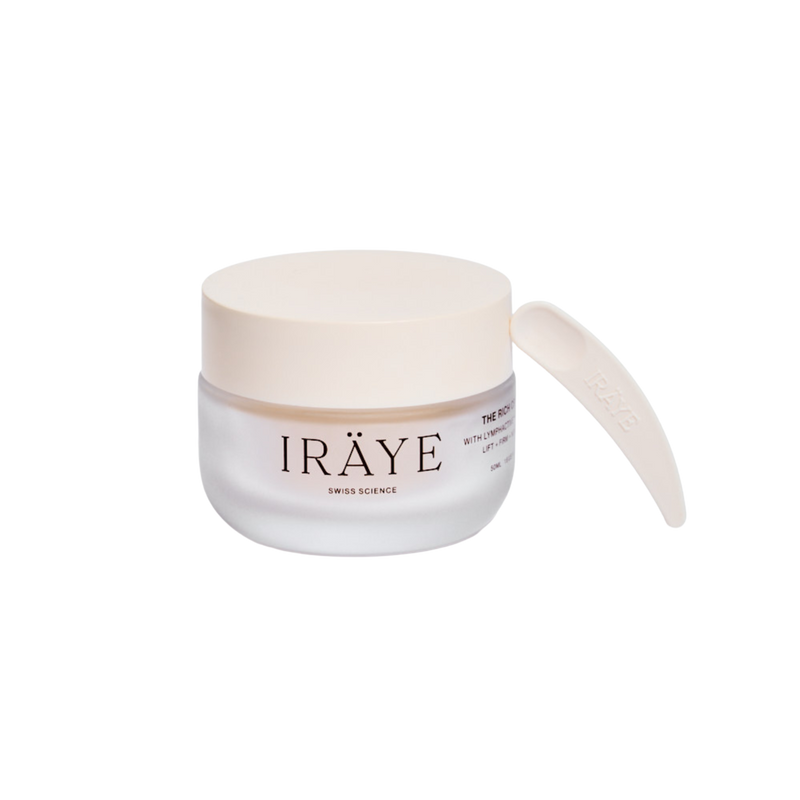
Follow with Eye Revive Cream with LYMPHACTIVE™ around the eye contour, then seal in with The Cream or, for drier skin, The Rich Cream. Explore the full IRÄYE face care collection to build a complete ritual around LYMPHACTIVE™ and facial massage.
Can Facial Massage Help With Puffiness?
Puffiness and tension are not the same. Puffiness is linked to fluid in the superficial tissues, while tension is linked to muscular activity and a feeling of tightness, and a face can experience both at once. For visible puffiness, particularly around the eyes and lower face, the light FLOW phase is the most relevant part of the routine. Eye Revive Cream with LYMPHACTIVE™ is formulated to target the look of puffiness and dark circles at the eye contour, making it a natural complement to this step. For tension around the jaw, temples or forehead, the PRESS and MOVE phases are more appropriate.
When Is the Best Time to Massage Your Face?
• Morning: especially useful if you wake up with a puffy face or tired-looking eyes.
• Evening: targeted pressure can feel particularly good after long hours at a screen, periods of concentration or habitual jaw clenching.
• Before an event: use the full three minutes as a quick facial reset before makeup.
There is no need for a long massage. Consistency and precision matter more than intensity or duration.
Gua Sha or Facial Release Tool: Which One Should You Use?
Choose the Eye & Face Gua Sha when your priority is broad gliding massage, sculpting and a lymphatic-inspired depuff. Choose the Precision Facial Release Tool when your priority is targeted pressure on the jaw, temples, brows and small areas of tightness. The two are complementary rather than interchangeable: if your face feels tense, release first; if it looks puffy, flow next.
The 3-Minute Facial Reset, Summarised
1. PRESS (about 1 minute): use the precision end to release tension at the jaw, temples, brows and brow centre.
2. MOVE (about 1 minute): use the larger end for small, slow circles over the jaw, temples, brow line and forehead.
3. FLOW (30–45 seconds): use very light strokes from the centre of the face to the ears, then down the neck to the collarbone.
Some mornings your face may feel puffy. Some evenings it may feel tense. Some days it may simply look tired. The right technique depends on the concern. PRESS. MOVE. FLOW. Release tension. Awaken the skin. Restore flow.