








What Is Facial Fascia? Muscles, Tension and Why Your Face Is More Than Skin
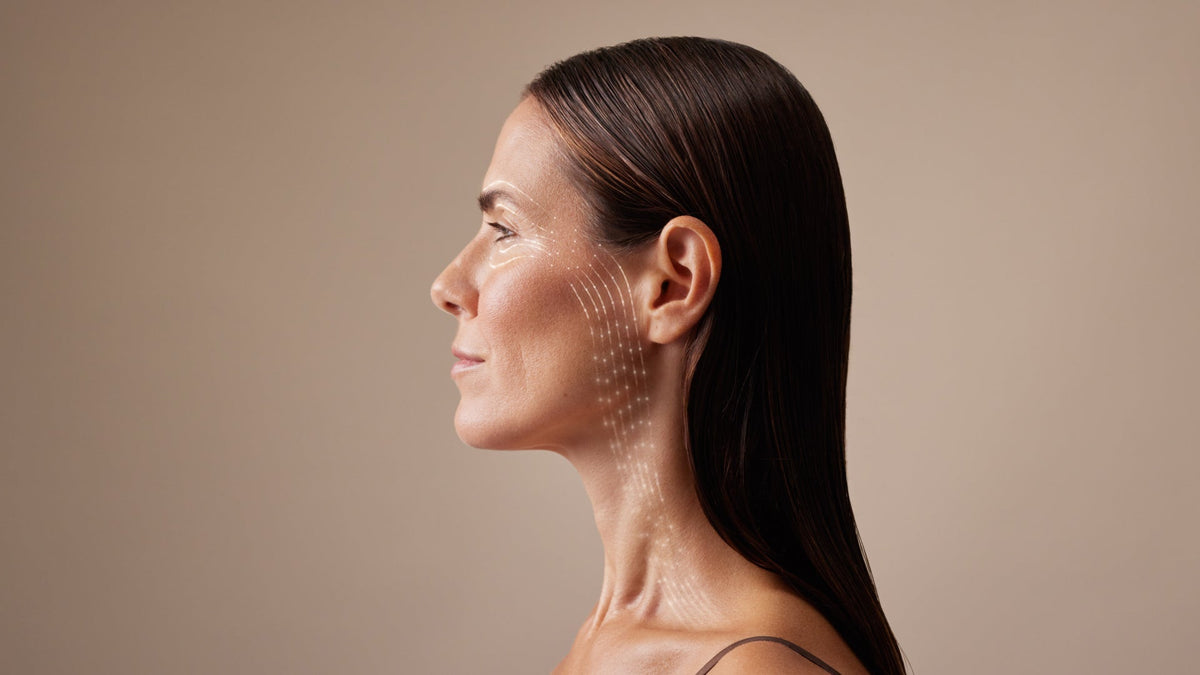
We spend a great deal of time thinking about what happens at the surface of the face: hydration, firmness, radiance, fine lines and puffiness. Yet the way the face looks and feels is shaped by far more than skin. Beneath the surface sits facial fascia, alongside fat compartments, muscles, nerves, blood vessels and lymphatic vessels: a connected architecture that moves every time we smile, speak, squint or clench the jaw.
Blood circulation supplies these tissues, while the lymphatic network helps collect and transport excess fluid from between the cells. What we see at the surface is therefore influenced not only by the skin itself, but by the dynamic environment beneath it. Understanding that environment is the first step towards a more intelligent facial ritual.
What Is Facial Fascia?
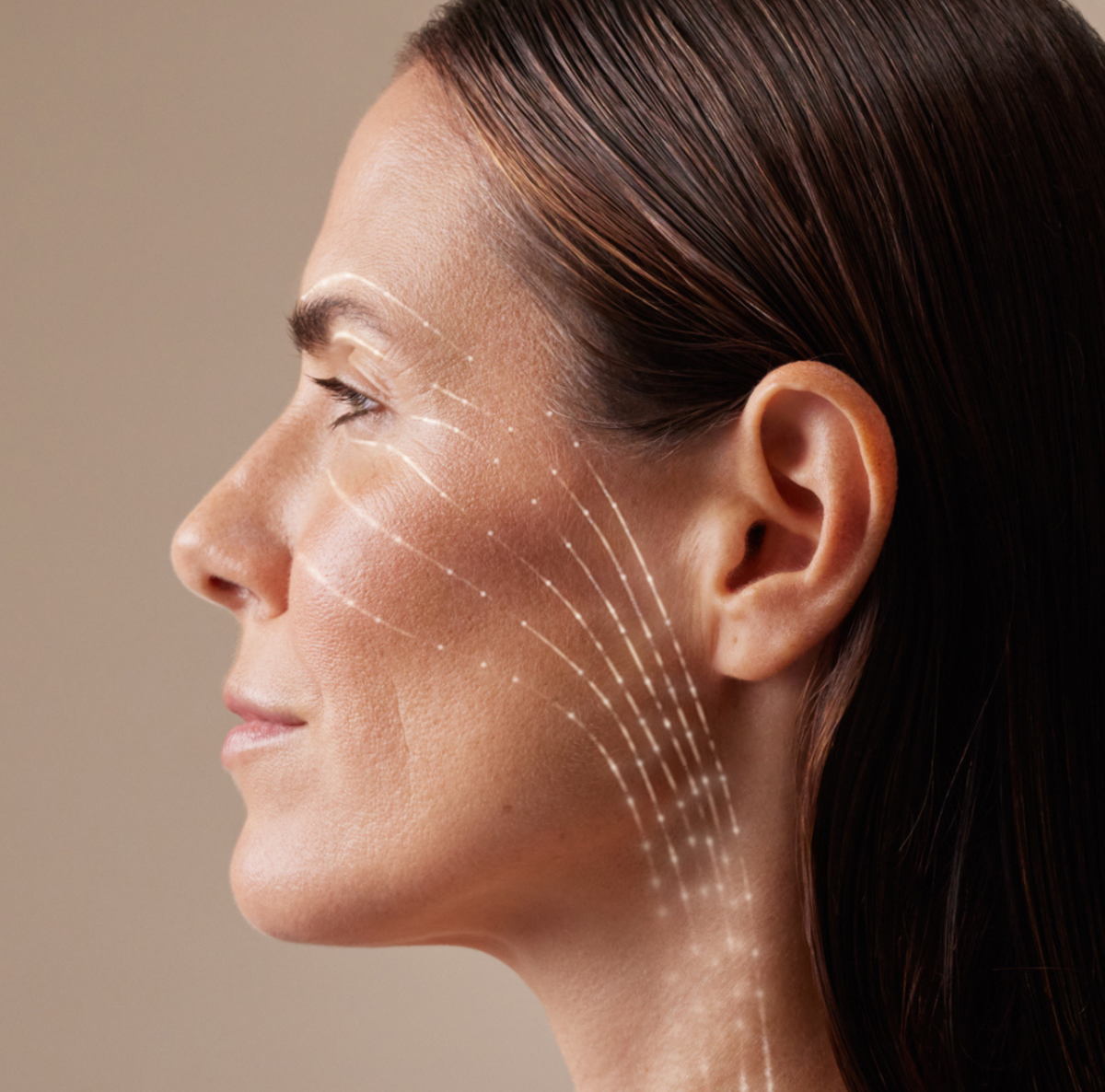
Fascia is connective tissue that helps organise, separate and connect structures throughout the body. In the face, the key fascial layer is the superficial musculoaponeurotic system (SMAS): a three-dimensional network of collagen, elastic fibres and muscle fibres that links the facial muscles, the fat compartments and the skin. Anatomical studies show that its exact organisation varies from one region of the face to another.

Facial fascia, without the myths
On social media, fascia is often portrayed as a mysterious “web” that massage can “break up” or free from “adhesions”. For an at-home skincare ritual, that is not a scientifically accurate description of what is happening. Fascia is real anatomy, and fascinating enough without the myths.
A more accurate idea is mechanical stimulation: pressure, touch and small controlled movements interact with the superficial tissues and can create a sensation of movement and release.
Fascia, circulation and lymphatic flow
Fascia, blood circulation and lymphatic function are not the same system, and one should not be used to explain the other. But anatomically, muscles, connective tissue, blood vessels and lymphatic vessels sit side by side within closely related tissue layers. This is why a modern facial ritual can reasonably address several dimensions at once: muscular tension, tissue mobility, blood flow in the skin and gentle support of fluid movement.
Why Does Your Face Hold Tension? The Jaw, Temples and Brows

Think about how many unconscious facial movements happen in an ordinary day: concentrating at a screen, furrowing the brow, squinting, chewing, speaking, pressing the lips together or clenching the teeth.
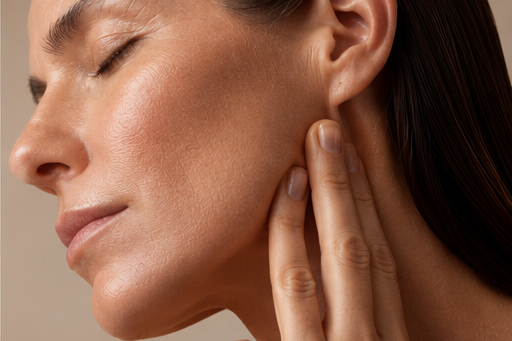
The jaw is particularly interesting. The masseter is one of the major muscles involved in chewing, while the temporalis fans across the temple and also contributes to jaw movement. Both can feel noticeably tight in people who habitually clench or carry tension around the jaw.
Manual therapy of the jaw muscles is well studied in clinical settings, particularly for temporomandibular disorders, where researchers have examined its effect on pain and mouth opening.Those clinical findings cannot be translated directly into cosmetic claims for an at-home tool, but they do support a simple idea: the jaw and the muscles around it are meaningful areas for targeted manual work.
If you feel tension extending into the scalp and neck, explore our guide to Gua Sha cranial reset points for tension relief.
Facial Tension vs Puffiness: What’s the Difference?

This is one of the most important distinctions to understand. A face can feel tense because certain muscles and tissues feel contracted. A face can look puffy because of fluid accumulating in the superficial tissues. And a complexion can appear dull or tired for different reasons again. These experiences can coexist, but they do not call for the same technique.
- Facial tension: a feeling of tightness, often around the jaw, temples, brows and forehead. Best suited to targeted pressure and small, local movements.
- Facial puffiness: a visible fullness linked to fluid in the superficial tissues, often around the eyes and lower face. Best suited to light, directional movements.
- Tired-looking skin: a loss of freshness or radiance. Best suited to a short massage, sensory stimulation and targeted skincare.
Puffiness is where the lymphatic system becomes particularly relevant. Unlike blood, lymph has no central pump equivalent to the heart. It is propelled by the rhythmic contraction of the lymphatic vessels themselves, helped along by breathing, the movement of nearby muscles and gentle pressure from outside. In the face, much of this network lies close to the surface, collecting fluid from the tissues and carrying it towards the lymph nodes of the jaw and neck before it ultimately returns to the bloodstream.
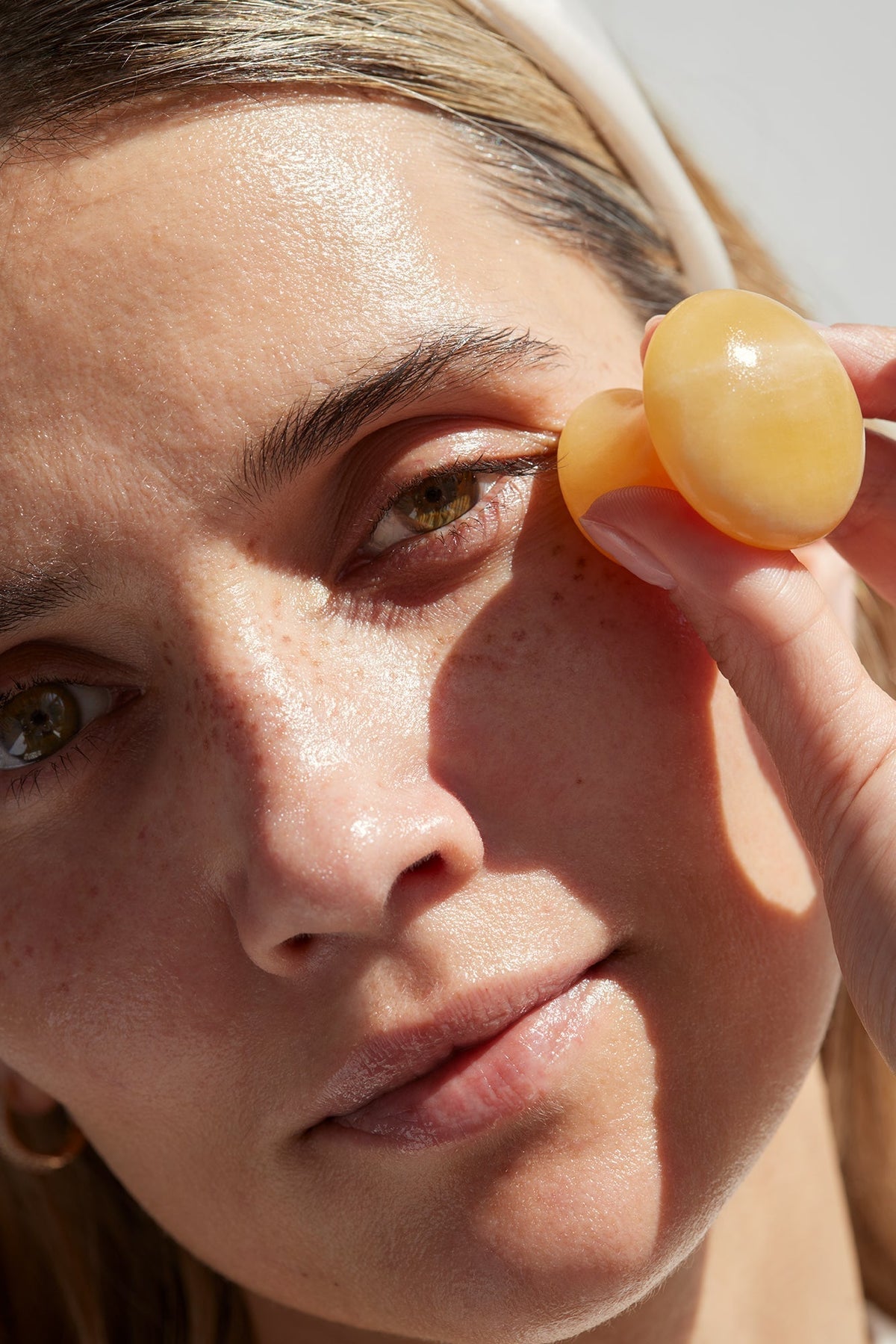
For puffiness, broad, light, directional gestures, such as those performed with the IRÄYE Eye & Face Gua Sha, are the most relevant. Lymphatic-inspired massage should remain gentle: the aim is not to press deeply into the tissues, but to respect the superficial nature of much of the facial lymphatic network. For tension, a more targeted technique makes sense: pressure, micro-movements and local massage. Different concerns call for different pressure. To make the most of lighter techniques, read Lymphatic Drainage: How to Make Your Results Last.
How Does Facial Massage Affect the Skin?
Massage is a form of mechanical stimulation, and that stimulation can produce measurable changes in the skin. In a small human study, five minutes of facial roller massage temporarily increased blood flow in the treated cheek.That does not mean every massage tool produces the same result, nor that stronger pressure brings a greater benefit. It simply shows that the way we touch the face matters.
This is also why facial massage should not be reduced to a single benefit such as “drainage”. Depending on the technique, touch may be used to target muscular tension, provide sensory stimulation, temporarily increase blood flow in the skin, or accompany fluid movement through light directional massage. Direction matters. Pressure matters. Surface area matters. Movement matters. And the intention behind the technique matters too.
Release Before You Sculpt: The IRÄYE Facial Release Method™
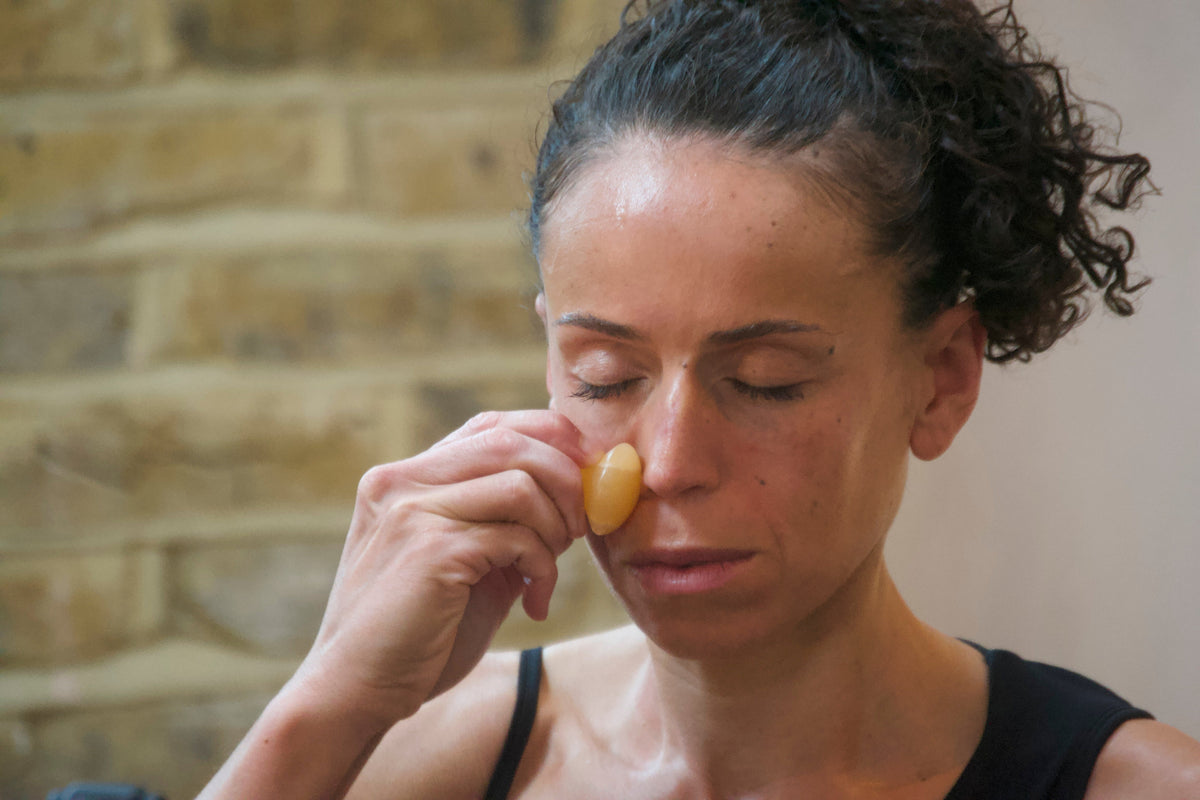
This is the principle behind the IRÄYE Facial Release Method™. Rather than beginning immediately with sweeping movements, the ritual starts by identifying the areas where the face feels tight: the jaw, temples, brows and forehead.
- PRESS: apply controlled, targeted pressure.
- MOVE: introduce small, slow micro-movements rather than long sweeping strokes.
- FLOW: reduce the pressure and finish with gentle directional movements towards the sides of the face, neck and collarbone.

The final FLOW phase is where facial release reconnects with IRÄYE’s lymphatic philosophy. Once the targeted tension work is complete, pressure becomes lighter and movement becomes directional, shifting the intention from local release towards circulation and gentle, drainage-inspired massage.
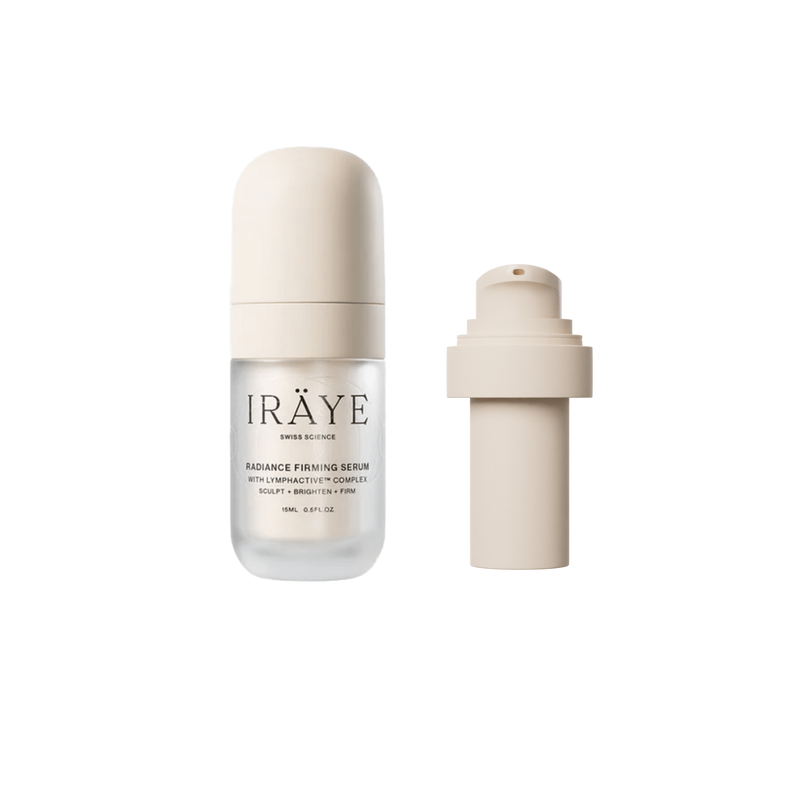
The goal is not to force the tissues or radically reshape the face. It is to bring a few deliberate minutes of targeted mechanical stimulation into your skincare ritual, helping the face feel relaxed, refreshed and more awake. Paired with Radiance Firming Serum with LYMPHACTIVE™, the ritual brings together two complementary dimensions of the IRÄYE approach: lymphatic skincare and intelligent facial massage. Discover the research behind it in The Science Behind IRÄYE.